

Physical Therapy (PT)
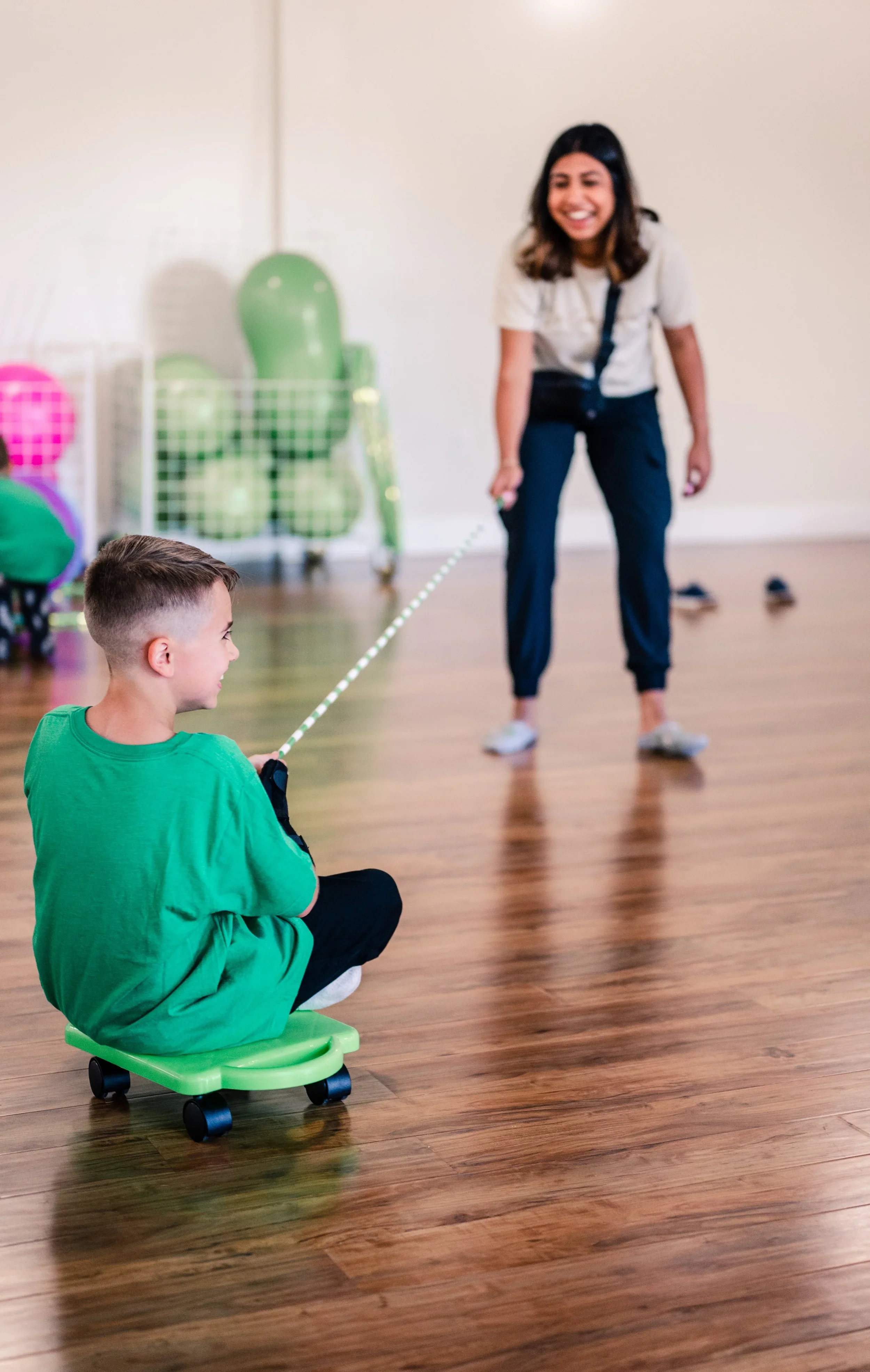
For children building strength, balance, coordination, and mobility, our physical therapists work alongside your child’s ABA therapy team to turn hard work into play, helping bodies move with more freedom and more joy.
Perform age appropriate motor skills
Difficulty keeping up with peers
Demonstrates abnormal walking pattern
Your child may benefit from physical therapy if they exhibit any of the following:
Displays physical misalignment
Muscle tightness/weakness
Sport-related or play-related injury
What is Physical Therapy at BloomKidz?
Strength & Postural Stability
Building the muscular foundation needed for comfortable sitting, standing, and active movement:
Trunk strengthening for postural control and stability
Upper and lower extremity strength development
Joint range of motion and flexibility
Balance & Movement Patterns
Helping children move smoothly, safely, and efficiently through their environments:
Balance, agility, and overall body coordination
Evaluating and correcting gait deviations (such as toe-walking or in-toeing)
Functional Mobility & Independence
Giving your child the physical confidence to navigate their world:
Independent mobility skills for home, school, and community settings
Safe navigation across play equipment, stairs, and uneven surfaces
Not sure what to expect?
Frequently Asked Questions About Physical Therapy
-
For children building strength, balance, coordination, and mobility, our physical therapists turn hard work into play, helping bodies move with more freedom and more joy.
-
BloomKidz does not offer standalone outpatient PT. Physical therapy is layered into a child's core ABA schedule when gross motor, balance, or alignment needs are identified during evaluation.
-
Physical therapy goals—such as core stability, gait training, and balance—are integrated directly into your child's daily ABA routines. RBTs and PTs collaborate so movement goals are practiced safely throughout the day.
-
Signs include difficulty keeping up with peers physically, abnormal walking patterns (toe-walking, in-toeing), muscle tightness or weakness, frequent falling, poor sitting posture, or recovery from a play injury.
-
Focus areas include upper and lower extremity strength, joint range of motion, balance, coordination, trunk strengthening for postural stability, gait correction, and independent mobility skills.
-
Gait deviations are inefficient walking patterns (like toe-walking). Trunk stability refers to core muscle strength, which provides the foundation for balance, posture, sitting at a desk, and coordinating complex physical movements.